Snom M900 Outdoor DECT Multi-cell Base Station

Frequently Asked Questions

First, check that the Ethernet cable is seated firmly at both ends and that the switch port is providing 802.3af PoE. Try a known-working port and a different cable if possible. If the base station still shows no lights, test the cable run with a PoE tester to rule out a break or excessive length.
Confirm the DECT sync source setting in the base station configuration. In a multi-cell setup, one base station acts as the sync master; if that unit is unreachable or misconfigured, other base stations will not accept registrations. Also verify that the handset firmware is up to date and compatible with the multi-cell configuration.
Check that all base stations in the cluster share the same DECT sync source and that LAN synchronization is properly configured. Overlapping coverage zones are necessary for seamless handover, so walk the site and note dead spots. Adjust base station placement or add a repeater where coverage gaps exist.
The unit is designed for wall mounting and the IP55 rating assumes a vertical orientation that sheds water properly. If you need to mount it on a pole, use a purpose-built bracket that keeps the housing upright and allows cable entry from the bottom. Avoid any orientation where water could pool around the cable gland or seams.
Assign the new base station a unique IP address on the same network segment as the existing cluster, then point it to the same DECT sync master. Ensure the RFPI and cluster settings match the rest of the deployment. Once it synchronizes, handsets should see it as an available base station automatically.
Intermittent audio on DECT often points to interference or marginal signal. Check for other DECT or 1.9 GHz sources nearby and try relocating the base station higher with a clearer line of sight. If the problem only happens in certain weather conditions, inspect the cable gland and housing seals for moisture ingress.
The base station is designed for Snom M-series handsets. While DECT is a standard, full feature compatibility and seamless handover in a multi-cell setup are only guaranteed with supported Snom handsets. Third-party handsets may register but often lack access to phone book features and reliable roaming.
Active calls on handsets connected to that base station will drop. The handsets will attempt to roam to another base station in the cluster if coverage overlaps. Check your switch logs for port flaps or PoE power budget exhaustion, which are common causes of intermittent loss.
IP Phones

Snom M900 Outdoor DECT Multi-cell Base Station
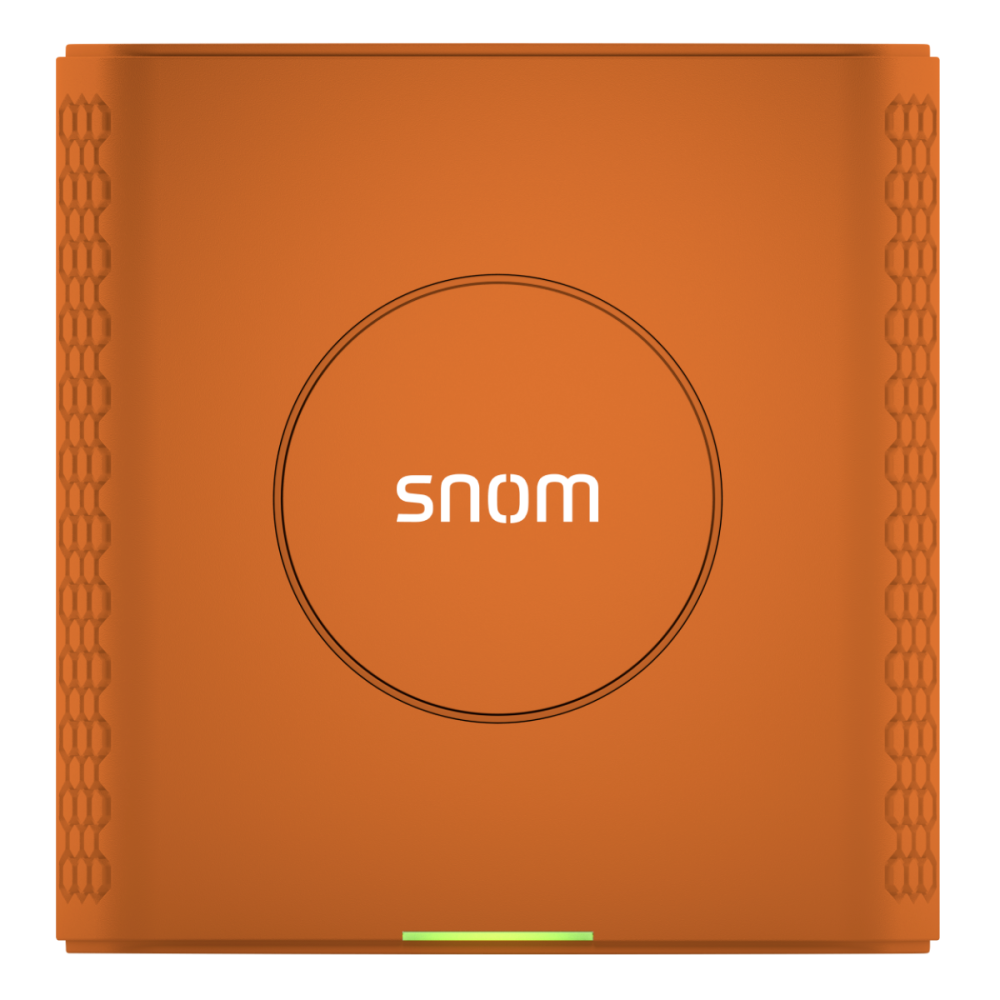
• High-temperature range: -20°C to 60°C • IP55 rated housing for UV, impact, and water protection • Supports up to 1,000 base stations and 4,000 handsets • DECT and LAN synchronization with no DECT manager required • Compatible with existing handsets and supports over-the-air software updates • Repeater support and PoE (Power over Ethernet) capabilities • TLS encryption for secure communication • DSP module support and wall mountable design • Local, XML, and LDAP phone book support available • Fully compatible with Snom M900 base stations Additional Information: Weight: 3 lb Dimensions: 13.25 × 8.25 × 3.5 in Phone Type: DECT Technical Specifications: Model: M900 Outdoor APN: 89-S065-00 Cell type: Multi-cell, up to 4000 base stations per set-up Number of connected handsets: 30 per base station, up to 16,000 in multi-cell set-up Compatible handsets: M25, M65, M70, M80, M85, M90 Repeater support: Yes, up to 100 in a multicell setup Power Connector: PoE and Power Adapter Power over Ethernet class (PoE): IEEE 802.3af, Class 2 Temperature range: -20°C – 60°C Type approval: CE mark, Electrical Safety EN60950 Impact strength IK08 UL746C 5V flammability tested UL746C water exposure tested Housing IP55 protection rated

About This Product

The Snom M900 Outdoor is a ruggedized DECT base station built for businesses that need to extend cordless coverage into harsh environments. Warehouses, loading docks, outdoor patios, and manufacturing yards are natural fits for this device. It takes the same multi-cell architecture used indoors and hardens it against Canadian winters and summer heat, with an operating range that holds up from -20°C up to 60°C. The IP55-rated housing means it can shrug off rain, dust, and direct UV exposure without needing a secondary enclosure.

This unit pairs with Snom’s M-series handsets and integrates into larger campus-wide deployments. Because it supports LAN and DECT synchronization without a separate DECT manager, you can mix indoor and outdoor base stations under one system and manage them together. A single M900 Outdoor handles up to 30 handsets, and the architecture scales to thousands of endpoints across hundreds of base stations, which makes it viable for a distributed GTA logistics hub or a multi-building campus.

There are practical limits to consider. The base station relies on PoE (802.3af Class 2), so you need to plan cable runs that reach outdoor mounting points safely. While the radio range is solid, dense concrete walls or metal racking will still degrade DECT signal, so site planning remains essential. This is not a plug-and-forget consumer device; it expects a structured deployment with proper network provisioning.

For a small office with a handful of cordless users who never step outside, the M900 Outdoor is overkill. An indoor base station costs less and is simpler to mount. But where workers are moving between indoor and outdoor zones and calls cannot drop when they cross the threshold, this base station fills a gap that indoor-only hardware simply cannot cover.
Services We Provide
  • Professional Installation & Configuration
  • Ongoing Maintenance & Support
  • Troubleshooting & Repairs
  • System Upgrades & Updates