Grandstream CloudUCM Business
Frequently Asked Questions
First, confirm that the phone has a valid IP address and can reach the internet. Then verify that the SIP registration credentials in the phone’s web interface match exactly what is configured in the CloudUCM extension—watch for typos in the username, password, or server address. If the phone is behind a restrictive firewall, ensure that the required SIP and RTP ports are open or that the phone is using the CloudUCM’s SBC address for NAT traversal.
Audio issues are often network-related. Start by checking for packet loss or jitter on the internet connection, especially if the call involves a remote worker. A quick test is to have both parties switch to a wired Ethernet connection if they are on Wi-Fi, as wireless interference is a common culprit. If the issue persists, review your router’s Quality of Service (QoS) settings to prioritize voice traffic.
Ensure the app is using the correct CloudUCM domain and that your mobile device or laptop has a stable internet connection. If you are connecting through a VPN, try disconnecting it temporarily—some VPNs block SIP traffic. Also verify that the app’s login credentials match the extension’s SIP details and that the extension is not already registered on another device.
Log into the CloudUCM portal and check the SMTP settings under email configuration. Confirm the outgoing mail server address, port, and authentication are correct—many Canadian ISPs require specific SMTP relay settings. Also check the extension’s voicemail settings to ensure email delivery is enabled and the email address is entered without errors.
First, verify in the CloudUCM interface that the recording storage usage hasn’t reached the 10 GB limit; if it has, older recordings may be overwritten or new ones blocked depending on your retention policy. Also confirm that the call route or extension actually has recording enabled and that the destination for recordings is set to cloud storage rather than a local device. A simple test is to make a short test call and immediately check the recording log.
Within the CloudUCM admin portal, navigate to the system settings and look for the domain or branding section. You will need to point a CNAME record from your DNS provider to the CloudUCM-provided address. After updating DNS, it may take up to a few hours for the change to propagate. Ensure your SSL certificate covers the custom domain if you require HTTPS without browser warnings.
Yes, the platform supports API integration. Typically, you would use the CloudUCM’s webhook or event API to send call events to a middleware service that then queries your CRM and triggers a screen-pop. You will need development resources to build or configure this integration, as it is not a plug-and-play feature. Start by reviewing the API documentation available in the CloudUCM portal to understand the event payloads.
Power-cycle both the phone and your network switch/router first. Once everything is back online, check if the phone received an IP address. If the phone uses a static IP, ensure the gateway and DNS settings are still correct. If the CloudUCM service itself was not affected, the phone should re-register automatically within a few minutes. If not, re-enter the SIP server address and credentials to rule out any corruption from the sudden power loss.
Accessories
Grandstream CloudUCM Business
Business Annual Subscription Fee. Highlights include: • Up to 200 extensions • 64 concurrent audio/video calls • Built-in SBC and wave softphone app • 10GB Cloud storage for recordings • API integration with third-party add-ons available • Customer service platform support and custom domain name Third-Party SDKs can be integrated for added functionality.
About This Product
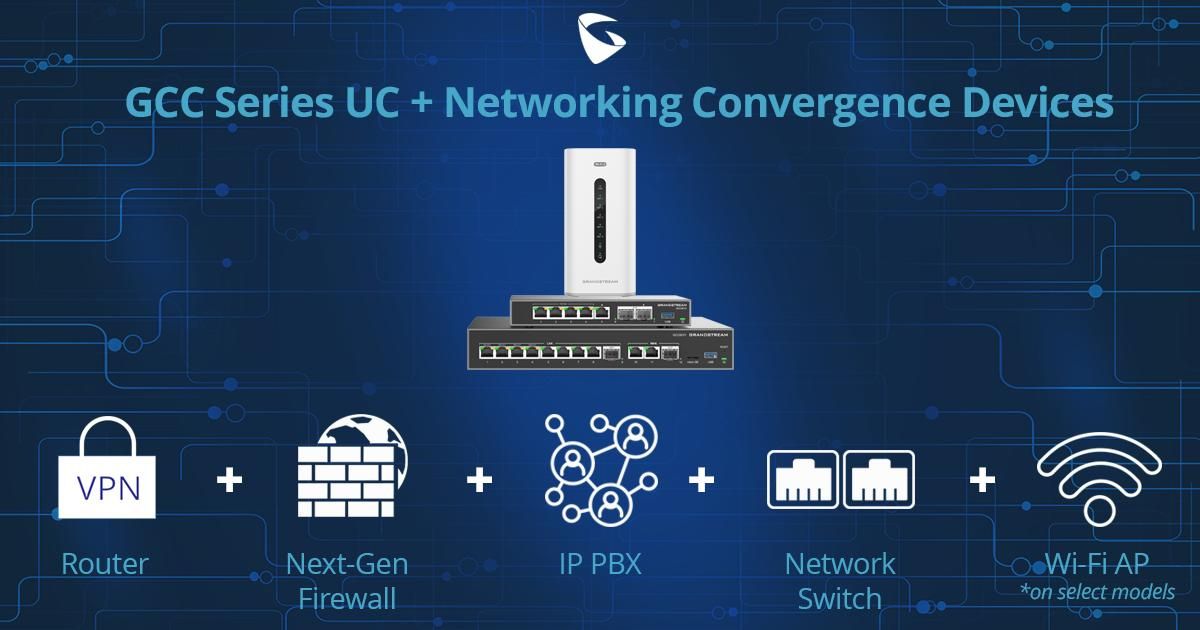
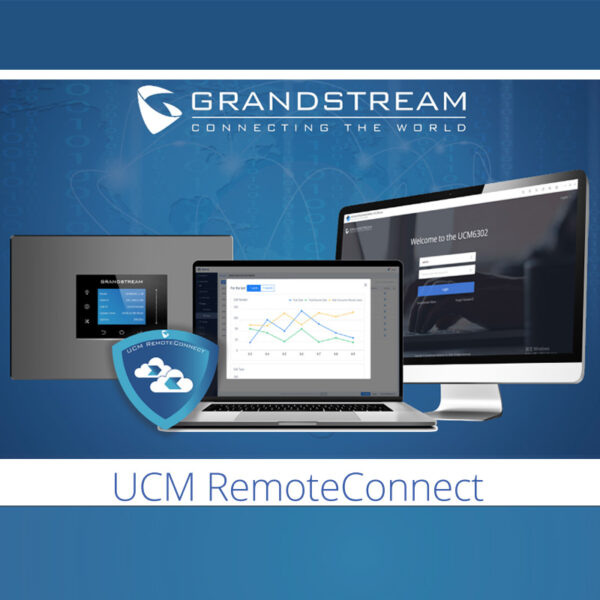
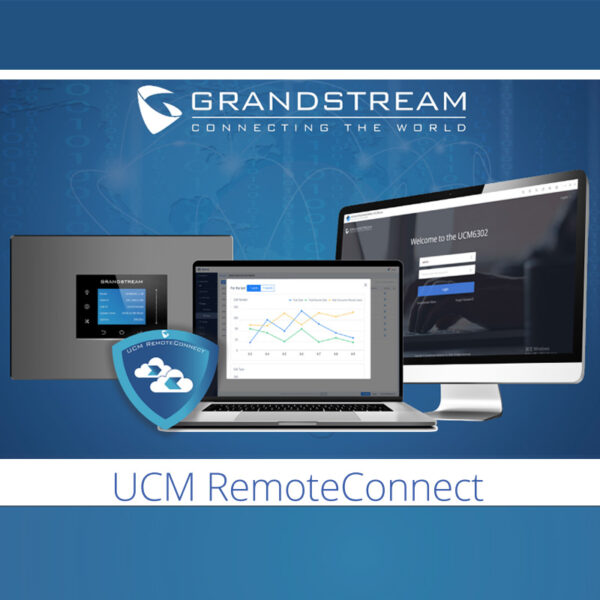
Grandstream’s CloudUCM Business is a hosted unified communications platform that shifts the PBX out of the server closet and into a managed cloud environment. It is aimed at small to mid-sized businesses that want enterprise-style voice and video features without the overhead of on-site hardware maintenance. The service is especially relevant for distributed teams or multi-site Canadian operations—think a law firm with offices in Toronto and Ottawa—because the built-in Session Border Controller (SBC) and softphone app simplify remote handset deployment and NAT traversal. Since it is a subscription model, it suits organizations that prefer predictable OpEx over a CapEx-heavy appliance purchase, and it pairs naturally with Grandstream endpoints while remaining open to third-party SIP devices.
The 200-extension ceiling and 64 concurrent call paths make this a capable system for a growing office, but it is not a fit for large contact centers or enterprises that routinely push hundreds of simultaneous calls. The included 10 GB of recording storage is adequate for moderate compliance or training needs, yet businesses with heavy call-recording requirements should plan for offloading or additional storage costs. The ability to integrate via APIs and third-party SDKs is a genuine differentiator, allowing custom CRM screen-pops or workflow automation, but it does assume some in-house development skill or a partner to build those integrations.
A practical tradeoff to weigh is that all call control depends on a stable internet connection. For Canadian businesses in areas with less reliable broadband, a local survivability appliance or a hybrid setup might be a safer complement. Conversely, for a Toronto startup that operates entirely on cloud tools and has no appetite for managing a PBX, CloudUCM Business aligns well with that operational philosophy. It is overkill for a micro-business that only needs a handful of extensions and basic auto-attendant, where a simpler hosted voice service would suffice. It is underpowered for a large-scale operation that requires dedicated hardware for low-latency conferencing or thousands of endpoints.
On the compatibility front, the platform’s built-in SBC means fewer headaches when connecting remote workers or branch offices, but it is still wise to verify that your chosen Canadian SIP trunk provider is supported and that your firewall policies are aligned. The custom domain name and customer service platform support hint at a product that can be white-labeled or deeply integrated into a business’s existing brand and support workflows, which is valuable for managed service providers or companies wanting a seamless customer experience.
The 200-extension ceiling and 64 concurrent call paths make this a capable system for a growing office, but it is not a fit for large contact centers or enterprises that routinely push hundreds of simultaneous calls. The included 10 GB of recording storage is adequate for moderate compliance or training needs, yet businesses with heavy call-recording requirements should plan for offloading or additional storage costs. The ability to integrate via APIs and third-party SDKs is a genuine differentiator, allowing custom CRM screen-pops or workflow automation, but it does assume some in-house development skill or a partner to build those integrations.
A practical tradeoff to weigh is that all call control depends on a stable internet connection. For Canadian businesses in areas with less reliable broadband, a local survivability appliance or a hybrid setup might be a safer complement. Conversely, for a Toronto startup that operates entirely on cloud tools and has no appetite for managing a PBX, CloudUCM Business aligns well with that operational philosophy. It is overkill for a micro-business that only needs a handful of extensions and basic auto-attendant, where a simpler hosted voice service would suffice. It is underpowered for a large-scale operation that requires dedicated hardware for low-latency conferencing or thousands of endpoints.
On the compatibility front, the platform’s built-in SBC means fewer headaches when connecting remote workers or branch offices, but it is still wise to verify that your chosen Canadian SIP trunk provider is supported and that your firewall policies are aligned. The custom domain name and customer service platform support hint at a product that can be white-labeled or deeply integrated into a business’s existing brand and support workflows, which is valuable for managed service providers or companies wanting a seamless customer experience.
Services We Provide
- Professional Installation & Configuration
- Ongoing Maintenance & Support
- Troubleshooting & Repairs
- System Upgrades & Updates