Grandstream UCMRC SOHO Plan
Frequently Asked Questions
First, confirm that the UCMâs RemoteConnect service is enabled and shows a green status in the web interface under Value-added Features. Next, check that the remote extensionâs phone or softphone is using the correct RemoteConnect proxy address shown in the UCM portal, not the local IP of the PBX. The extension must also be assigned to the correct user and have RemoteConnect permission toggled on.
Audio issues over RemoteConnect often point to a network firewall or router blocking UDP traffic. Verify that the remote userâs internet connection allows outbound UDP on ports used by the UCM (typically 5060 for SIP and a range for RTP). A quick test is to have the remote user try from a different network, like a mobile hotspot, to see if the problem follows the location.
Yes, the concurrent call count covers any active two-way audio or video session that passes through the RemoteConnect service, including internal extension-to-extension calls that involve at least one remote endpoint. Purely local calls between two on-site extensions donât use the planâs capacity, but a call between a remote user and an on-site desk phone does.
For local desk phones, no changes are usually needed. Remote phones or softphones must be reprovisioned to point to the RemoteConnect server address instead of the UCMâs local IP. The UCMâs built-in zero-config provisioning can push the new settings if the remote device is factory-reset and pointed to the UCMâs provisioning URL.
A short, consistent call duration often indicates a SIP session timer mismatch or a firewall closing a pinhole. On the UCM, check that the SIP session timers under PBX Settings are set to a reasonable value (like 1800 seconds) and that the remote routerâs UDP timeout is not set too low. Temporarily enabling TCP transport for the remote extension can help isolate whether UDP timeouts are the culprit.
Yes, as long as the UCM hardware is a model that supports UCM RemoteConnect (UCM6200 series or later) and the device is not flagged as lost or stolen in Grandstreamâs system. Youâll need to factory-reset the UCM, register it to your own GDMS cloud account, and apply the SOHO plan to that account. If the previous ownerâs plan is still associated, Grandstream support can help transfer ownership.
The system wonât block the 21st user from being created locally, but the RemoteConnect service will not allow that user to register remotely. Youâll see a registration failure in the UCM logs. To add more remote users, you would need to upgrade to a larger UCMRC plan tier that supports a higher user count.
First, verify that the phoneâs firmware is current and compatible with the UCMâs RemoteConnect feature. Next, check the phoneâs time and date settingsâif the time is wrong, TLS certificates can fail, preventing registration. As a quick safe test, switch the phone to use UDP transport and disable TLS temporarily to see if registration succeeds, then re-enable security once youâve isolated the problem.
The subscription is linked to the UCMâs MAC address in your GDMS account. If you replace the UCM hardware, youâll need to deactivate the plan on the old unit and activate it on the new one through the GDMS portal. Grandstreamâs support can assist with transferring the remaining subscription term, but itâs not an automatic process.
No. The UCMRC SOHO Plan only provides remote connectivity to your existing UCM PBX. You still need to arrange your own SIP trunk, analog lines, or other PSTN service separately. The plan handles the secure tunnel for extensions; call routing to the outside world depends entirely on the trunks youâve configured on the UCM.
Accessories
Grandstream UCMRC SOHO Plan
Annual Subscription Fee: $X per year Key Features: • 4 concurrent voice/video calls • Support for up to 20 registered users
About This Product
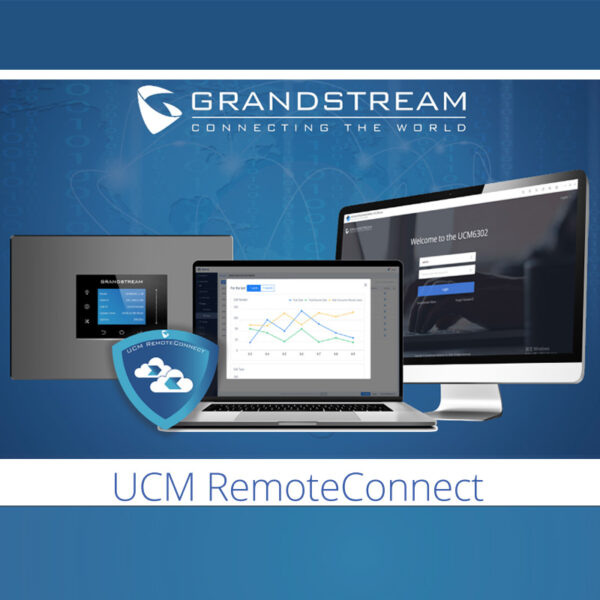
The Grandstream UCMRC SOHO Plan is a subscription add-on for small offices that already rely on a Grandstream UCM-series IP PBX. It activates Grandstreamâs cloud-based remote connectivity service, letting a handful of extensions work from anywhere without exposing the on-premises PBX to the public internet. For a business with up to twenty registered users, it removes the complexity of VPNs and firewall rules, making it practical to connect a few remote desks or home offices to the same phone system.
This plan caps concurrent calls at four, which includes both voice and video. That limit suits a micro-business or a professional practice where simultaneous external calls are rare, but it quickly becomes a bottleneck if the office regularly handles multiple client lines, a receptionist queue, and a conference call at the same time. Itâs a deliberate trade-off: simple remote access at a controlled cost, but not a substitute for a larger trunk or a multi-tenant setup.
It pairs naturally with a single UCM appliance deployed in a Toronto-area small office, especially where staff split time between a physical desk and a home office. The plan doesnât include PSTN connectivity or SIP trunking itselfâthose still need to be arranged separatelyâso buyers should budget for a SIP trunk or analog lines alongside the subscription. For a purely on-site team that never needs remote extensions, the plan may be overkill; the UCMâs local features already handle internal calling without it.
Larger deployments with ten or more active concurrent calls should look at the higher-tier UCMRC plans instead. This SOHO tier is intentionally narrow, and a growing office that hires quickly could outgrow the four-call ceiling within a year. Still, for the right small footprint, it turns a local PBX into a secure, manageable hybrid system without adding hardware.
This plan caps concurrent calls at four, which includes both voice and video. That limit suits a micro-business or a professional practice where simultaneous external calls are rare, but it quickly becomes a bottleneck if the office regularly handles multiple client lines, a receptionist queue, and a conference call at the same time. Itâs a deliberate trade-off: simple remote access at a controlled cost, but not a substitute for a larger trunk or a multi-tenant setup.
It pairs naturally with a single UCM appliance deployed in a Toronto-area small office, especially where staff split time between a physical desk and a home office. The plan doesnât include PSTN connectivity or SIP trunking itselfâthose still need to be arranged separatelyâso buyers should budget for a SIP trunk or analog lines alongside the subscription. For a purely on-site team that never needs remote extensions, the plan may be overkill; the UCMâs local features already handle internal calling without it.
Larger deployments with ten or more active concurrent calls should look at the higher-tier UCMRC plans instead. This SOHO tier is intentionally narrow, and a growing office that hires quickly could outgrow the four-call ceiling within a year. Still, for the right small footprint, it turns a local PBX into a secure, manageable hybrid system without adding hardware.
Services We Provide
- Professional Installation & Configuration
- Ongoing Maintenance & Support
- Troubleshooting & Repairs
- System Upgrades & Updates