Grandstream UCMRC Pro Plan

Frequently Asked Questions
First, confirm the phone has internet access by checking for an IP address on its display and trying to reach its web interface from a computer on the same network. Next, verify the SIP registration details in the phone’s account settings match exactly what the UCMRC portal shows for that extension, including the server address, username, and password. If the phone was previously used on a different system, a simple power cycle can clear a stuck registration attempt.
Begin by checking whether the problem happens on all calls or only external ones; if internal extension-to-extension calls are clear, the issue is likely with your internet connection or SIP trunk. Run a quick speed test from a wired computer on the same network switch as the affected phone, and confirm there is no heavy upload or download activity saturating the connection. Temporarily connecting a phone directly to your router or modem can help rule out a local switch or cabling problem.
A ‘Provisioning Failed’ message usually means the phone cannot reach the UCMRC provisioning server. First, check that the phone’s IP address, subnet mask, and default gateway are correct for the new network. Then ensure the phone’s DNS server setting is valid and that the phone can resolve external hostnames. If the network uses a firewall or content filter, confirm that outbound HTTPS traffic to Grandstream’s provisioning domain is allowed.
The platform is built to work best with Grandstream endpoints, where zero-touch provisioning and full feature support are guaranteed. Third-party SIP phones can often be registered manually by entering the server address and SIP credentials, but features like BLF keys, shared line appearances, and automated firmware updates may not function reliably. For a multi-vendor fleet, test one non-Grandstream phone thoroughly before rolling it out widely.
Start by checking the extension’s ring strategy in the UCMRC portal; it may be set to ring a ring group or queue that the phone is not a member of, or the phone could be in Do Not Disturb mode. Also look at the SIP trunk settings to confirm the inbound route points to the correct destination. If the business uses a ring group, verify that the group has at least one available member and that its ring timeout is not set to zero seconds.
Most Canadian SIP providers supply a trunk configuration guide with a server address, port, and authentication credentials. In the UCMRC portal, add a new SIP trunk and enter those details, paying close attention to the codec list; G.711u is standard in North America and should be the first codec offered. After saving, place an outbound test call and check the trunk status page for any registration or authentication errors.
First, try accessing the portal from a different browser or an incognito window to rule out a cached page or browser extension conflict. If the issue persists, check Grandstream’s official status page or your account dashboard for any posted service alerts. Because the portal is cloud-hosted, a local internet outage or a firewall blocking the management traffic can also make it appear unresponsive, so verify your connection can reach other cloud services.
Review the call detail records in the UCMRC portal to understand whether the concurrent calls are all necessary external conversations or if some are internal calls that could be moved to a separate intercom or chat channel. If the volume is legitimate, the business may need to upgrade to a higher-tier plan or offload some call paths to a local UCM appliance while keeping the cloud plan for remote users. A temporary workaround is to shorten call durations by encouraging callback requests during peak windows.
Yes, the UCMRC platform supports voicemail-to-email delivery. In the extension settings, enable the feature and enter the user’s email address. The 2 GB of included cloud storage is shared across recordings and voicemail files, so if email delivery is used as the primary archive, you may want to configure the system to delete voicemails from the server after they are sent.
The most common cause is the home router’s SIP Application Layer Gateway (ALG) interfering with the phone’s traffic. Ask the employee to log into their router and disable SIP ALG, then reboot both the router and the phone. If the issue continues, confirm the phone is using the correct NAT traversal setting (usually ‘Keep Alive’ or ‘STUN’) and that the home firewall permits the UDP port range used for RTP audio. If the problem persists, a Toronto-based VoIP support provider can usually resolve this remotely.
Accessories
Grandstream UCMRC Pro Plan
Annual Subscription Fee: $X • Up to 16 concurrent voice and video calls • Support for up to 100 registered users • 2 GB of cloud storage space
About This Product
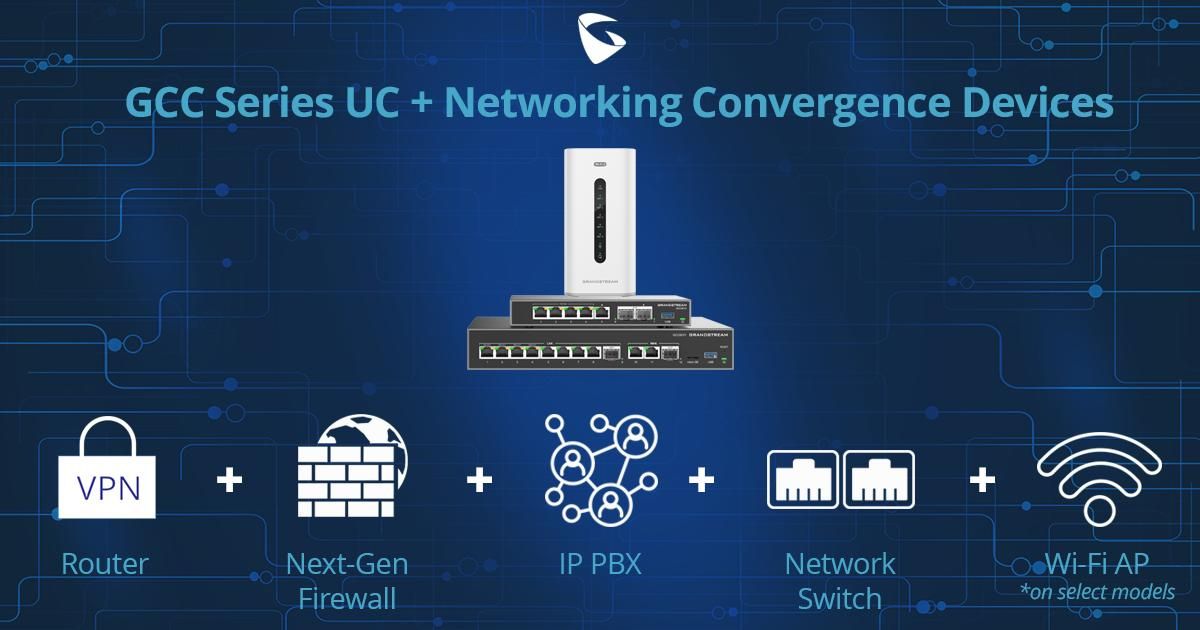
The Grandstream UCMRC Pro Plan is a cloud-based management and calling platform designed for small to mid-sized Canadian businesses that want the flexibility of a hosted PBX without sacrificing the deep integration Grandstream hardware offers. It suits offices that have outgrown a basic analog setup but do not need a full on-premises UCM appliance, particularly in environments where staff are split between a main location and remote work. The plan’s 100-user ceiling and 16 concurrent call paths place it squarely in the professional services, boutique retail, or small multi-branch deployment tier.
This subscription pairs naturally with Grandstream’s GRP and GXV series desk phones, cordless DECT bases, and the Wave softphone app, giving you a unified numbering plan and zero-touch provisioning across devices. Because it is a recurring operational cost rather than a capital purchase, it can simplify budgeting for a growing Toronto practice or a distributed team across the GTA. The included 2 GB of cloud storage is enough for a modest collection of call recordings and voicemail archives, but organizations with heavy compliance recording needs will want to check whether that capacity aligns with their retention policies before committing.
A practical limit to keep in mind is the concurrent call cap: sixteen simultaneous external calls means a receptionist handling a busy period and a few internal conference calls can consume that capacity faster than the user count suggests. It is a good fit for a business where call volume is steady but not call-center dense. For a high-volume sales floor or a contact centre that routinely queues dozens of callers, this plan would be underpowered, and a dedicated on-premises UCM or a higher-tier cloud service would be more appropriate.
Deployment is straightforward for a network that already has reliable internet and a local VLAN for voice, and the plan’s management portal removes the need to maintain a server in a back office. Canadian carriers with certified SIP trunks are fully compatible, though organizations using older analog lines will need a gateway to bridge those into the UCMRC environment. For a business that wants Grandstream’s ecosystem without managing hardware, the Pro Plan occupies a sensible middle ground between entry-level cloud services and full appliance ownership.
This subscription pairs naturally with Grandstream’s GRP and GXV series desk phones, cordless DECT bases, and the Wave softphone app, giving you a unified numbering plan and zero-touch provisioning across devices. Because it is a recurring operational cost rather than a capital purchase, it can simplify budgeting for a growing Toronto practice or a distributed team across the GTA. The included 2 GB of cloud storage is enough for a modest collection of call recordings and voicemail archives, but organizations with heavy compliance recording needs will want to check whether that capacity aligns with their retention policies before committing.
A practical limit to keep in mind is the concurrent call cap: sixteen simultaneous external calls means a receptionist handling a busy period and a few internal conference calls can consume that capacity faster than the user count suggests. It is a good fit for a business where call volume is steady but not call-center dense. For a high-volume sales floor or a contact centre that routinely queues dozens of callers, this plan would be underpowered, and a dedicated on-premises UCM or a higher-tier cloud service would be more appropriate.
Deployment is straightforward for a network that already has reliable internet and a local VLAN for voice, and the plan’s management portal removes the need to maintain a server in a back office. Canadian carriers with certified SIP trunks are fully compatible, though organizations using older analog lines will need a gateway to bridge those into the UCMRC environment. For a business that wants Grandstream’s ecosystem without managing hardware, the Pro Plan occupies a sensible middle ground between entry-level cloud services and full appliance ownership.
Services We Provide
- Professional Installation & Configuration
- Ongoing Maintenance & Support
- Troubleshooting & Repairs
- System Upgrades & Updates