ALGO 1186 Analog Horn Speaker
Frequently Asked Questions
First, verify that the 8180 is powered on and its built-in speaker is producing sound. If the 8180 itself is silent, check its PoE or power connection and the volume settings in its web interface. Next, confirm the 1186 wiring is securely connected to the 8180's speaker output terminals, matching polarity (red to red, black to black). If those check out, try a different short cable to rule out a wire break.
A continuous buzz usually indicates a grounding issue or interference on the audio line from the 8180 to the 1186. Ensure the 8180 and the 1186 share a common electrical ground, and avoid running the speaker cable parallel to AC power lines or other high‑EMI sources. You can also temporarily disconnect the speaker at the 8180 terminals to confirm the noise stops; if it does, the hum is coming from the wiring path, not from the horn itself.
Yes, you can connect more than one 1186, but you need to respect the total impedance and power limits. Two 8‑ohm speakers wired in parallel present a 4‑ohm load, which the 8180 can typically drive, but three in parallel would drop to 2.7 ohms, potentially overloading the amplifier. Check the 8180's manual for its minimum impedance rating. If you need wide coverage, it's often safer to add a second 8180 with its own horn rather than risk damaging the amplifier.
Distortion at high volume usually means the 8180's amplifier is being driven past its clean output range. Reduce the paging volume in the 8180’s web interface and check if the distortion clears. Also verify that the 1186’s impedance matches the 8180’s output rating—using a speaker with a lower impedance than specified can cause clipping. If the issue persists on a correctly wired system, contact your VoIP support provider for remote diagnostics.
Intermittent audio is often a loose or corroded connection. Check the screw terminals on both the 8180 and the 1186—especially if the horn is mounted outdoors where moisture can creep in. Ensure the wire is fully inserted and tightened. If the problem occurs only during paging, it might be due to network packet loss to the 8180, so also verify the 8180’s network connectivity and UDP jitter statistics in its status page.
Yes, the 1186 is designed for outdoor use with a weatherproof enclosure and stainless steel hardware. That said, it is not fully submersible, and the connection to the 8180 must be made using a weather‑sealed outdoor‑rated cable or a weatherproof junction box. For GTA installations where temperatures drop below freezing, the horn's electrical components are not affected by cold, but any exposed wire terminations should be protected against ice buildup.
Start by ensuring the 8180's volume is set to maximum in its web interface and that no separate limiting is applied to the paging zone. If it’s still too quiet, verify that the wiring gauge is adequate (long thin cables cause voltage drop) and that the speaker is aimed toward the coverage area. If you need significantly more output, consider using a second 1186 in a parallel setup (respecting impedance limits) or switching to a higher‑wattage horn; for GTA commercial spaces, a Toronto‑based VoIP support provider can usually assess your site and recommend an upgrade.
The 1186 is a passive 8‑ohm speaker that works with any amplifier rated for 8‑ohm loads up to 50 watts. However, it is designed to be used with the Algo 8180’s output, which includes volume control and integration with IP paging. If you connect it to a third‑party amplifier, you lose the SIP‑based paging automation unless your amplifier is part of a separate paging system. You also lose the convenience of PoE power. For most business VOIP setups, pairing it with the 8180 is the simplest way to get it working.
No, the 1186 is a passive load that draws audio power from the 8180's amplifier, not from the network or PoE budget. The 8180's amplifier is designed to drive an 8‑ohm load at 50W peak. If the 8180 shuts down or reboots after connection, the issue is likely a short circuit in the speaker wiring (bare strands touching the chassis) or an AC power problem. Disconnect the horn, reset the 8180, and if it runs normally again, carefully recheck your wiring connections before reconnecting.
Technically, yes, as long as the paging adapter has a speaker output rated for 8 ohms and the wattage doesn't exceed the 1186's 50W rating. However, the 1186’s wiring terminal and mounting bracket are designed for Algo products, so you may need to adapt the connections. Also, the gain staging may not match perfectly, so the volume could be unexpectedly low or high. For a reliable Canadian business installation, sticking with the Algo 8180 is recommended to ensure proper integration and support.
IP Paging
ALGO 1186 Analog Horn Speaker
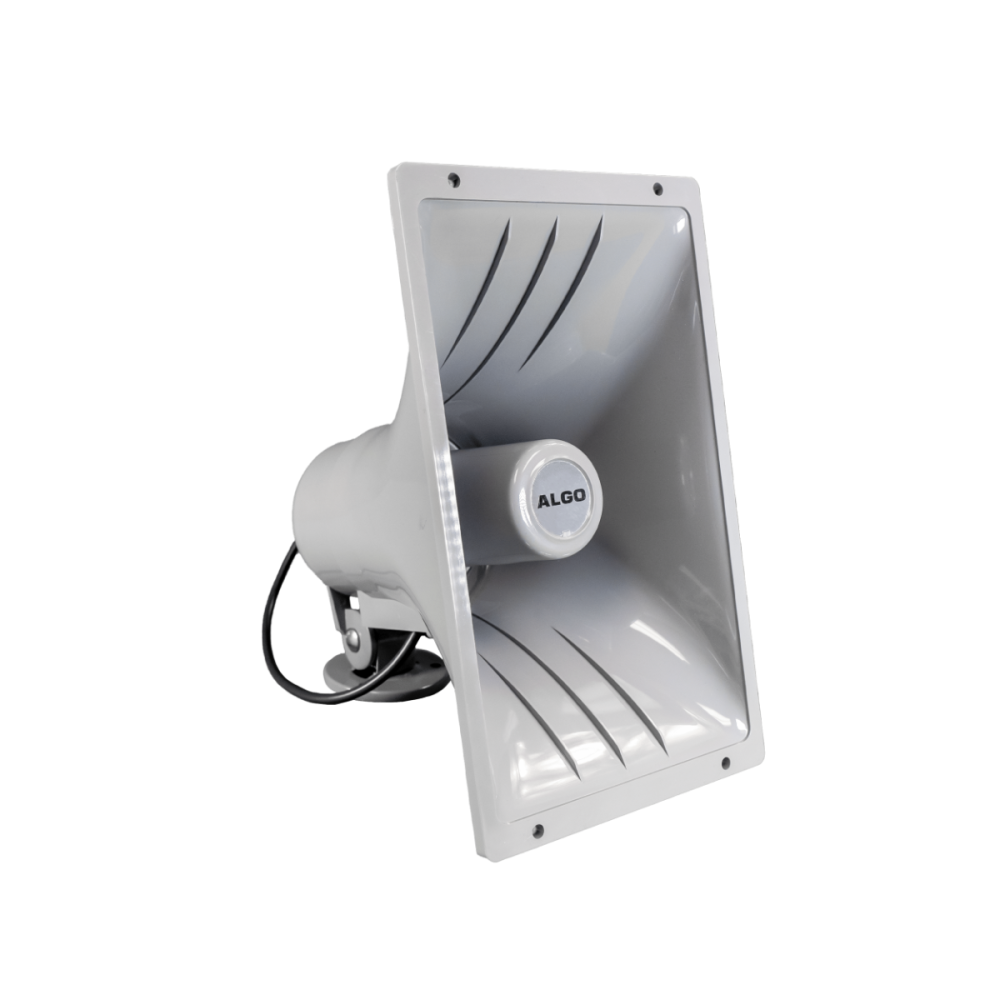
• The Algo 1186 Analog Horn Speaker is designed for use with the Algo 8180 IP Audio Alerter, providing additional volume when needed or in outdoor applications. • Suitable for both indoor and outdoor installations, this speaker features a rugged weatherproof enclosure with stainless steel hardware. • Key benefits include: • Interfaces easily with the Algo 8180 to provide increased loud ringing or voice paging volume • No power supply required - draws power from connected devices (1825 or 8180) • Wall-mountable and adjustable ABS plastic base for easy installation • 8-ohm speaker rated at 50 watts
About This Product
The Algo 1186 Analog Horn Speaker is a purpose-built, passive extension speaker designed exclusively for use with the Algo 8180 IP Audio Alerter (and compatible Algo drivers like the 1825). It is intended for environments where a standard phone or paging speaker does not deliver enough volume or where exposure to the elements is a factor. This makes it a strong fit for warehouse floors, outdoor loading docks, parking lots, or manufacturing areas in and around the Greater Toronto Area that require clear voice paging or loud ringing over ambient noise.
Because the 1186 draws its signal and power directly from the connected Algo device, there is no need for a separate amplifier or AC outlet at the speaker location. The 8-ohm, 50-watt driver is weather sealed in a rugged enclosure with stainless steel hardware, allowing it to be wall mounted in locations subject to rain, snow, or dust. The adjustable ABS plastic base simplifies aiming the speaker where coverage is needed most.
The primary tradeoff a buyer should understand is that this horn is not a standalone device. It has no built-in amplifier, SIP stack, or network interface; it is completely dependent on an Algo 8180 or 1825 to function. That same dependency also limits the maximum cable length from the driver, so installation planning must account for wiring distance and gauge to avoid signal loss. For offices requiring only modest paging volume or strictly indoor use, the Algo 8180’s built-in speaker alone may suffice, making the 1186 unnecessary. Conversely, in very large open areas, a single 1186 may not provide enough coverage, so zoning or multiple horns attached to additional 8180 units should be considered.
For Canadian deployments, the 1186’s weather rating and compatibility with 24 VDC paging systems commonly used in commercial VoIP installations align well with typical GTA industrial and retail environments. It pairs naturally with an Algo-based IP paging system that is already integrated with a SIP PBX or cloud voice platform, and it requires no configuration apart from wiring to the 8180’s speaker terminals. Overall, the 1186 is a focused solution for one job: getting audible alerts to places a normal speaker cannot reach.
Because the 1186 draws its signal and power directly from the connected Algo device, there is no need for a separate amplifier or AC outlet at the speaker location. The 8-ohm, 50-watt driver is weather sealed in a rugged enclosure with stainless steel hardware, allowing it to be wall mounted in locations subject to rain, snow, or dust. The adjustable ABS plastic base simplifies aiming the speaker where coverage is needed most.
The primary tradeoff a buyer should understand is that this horn is not a standalone device. It has no built-in amplifier, SIP stack, or network interface; it is completely dependent on an Algo 8180 or 1825 to function. That same dependency also limits the maximum cable length from the driver, so installation planning must account for wiring distance and gauge to avoid signal loss. For offices requiring only modest paging volume or strictly indoor use, the Algo 8180’s built-in speaker alone may suffice, making the 1186 unnecessary. Conversely, in very large open areas, a single 1186 may not provide enough coverage, so zoning or multiple horns attached to additional 8180 units should be considered.
For Canadian deployments, the 1186’s weather rating and compatibility with 24 VDC paging systems commonly used in commercial VoIP installations align well with typical GTA industrial and retail environments. It pairs naturally with an Algo-based IP paging system that is already integrated with a SIP PBX or cloud voice platform, and it requires no configuration apart from wiring to the 8180’s speaker terminals. Overall, the 1186 is a focused solution for one job: getting audible alerts to places a normal speaker cannot reach.
Services We Provide
- Professional Installation & Configuration
- Ongoing Maintenance & Support
- Troubleshooting & Repairs
- System Upgrades & Updates