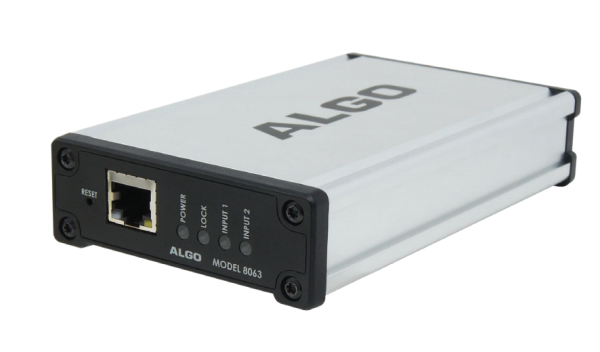
Algo 8063 IP Digital IO Module for Door Control & Automation
Frequently Asked Questions
Begin by confirming the LED status on the 8063 to verify it is powered and has link. Then ensure the SIP registration shows as active on your PBX or intercom interface; a failed registration means no commands will reach the device. Quiet often, a simple power cycle of the 8063 and a SIP re-registration from the intercom end clears this up. If the issue persists, a Toronto-based VoIP support provider can usually resolve this remotely.
Use a basic multimeter in continuity mode across the relay output terminals while a command is sent. If you hear a click from the relay but see no continuity change, the internal relay contact may need inspection by a technician. If the relay does close but the lock still does not fire, the problem is external: confirm that the lock power supply is present and that the wiring run from the 8063 to the lock is intact. Do not bypass factory wiring protections; instead ring out each conductor individually with all power off.
Intermittent disconnection on PoE devices frequently traces to cable issues rather than the module. Reseat the Ethernet cable on both ends and try a different, known-good cable. Test the switch port with a different PoE device to rule out a failing switch port or PoE budget exhaustion. If the module appears unreachable only during certain times of day, check whether a scheduled network scan or backup process on your LAN might be saturating the link.
No, the 8063 is a pure SIP device that registers to a VoIP server or peer-to-peer SIP endpoint. It does not have an FXO or FXS port and cannot interpret analog or digital PSTN signaling. To use it in a facility without VoIP, you would first need an IP-enabled PBX or an AT A converting your phone lines to SIP.
The 8063 will accept SIP-based control from most standards-compliant intercoms and phone systems, not just Algo endpoints. Compatibility depends on proper SIP configuration: the controller must be able to place a call or send a NOTIFY event that triggers the relay on the 8063. It is wise to test a single unit with your exact non-Algo intercom model before deploying across a building, as some proprietary door control URI schemes may require extra setup on the PBX.
Each 8063 provides a single relay output, so it controls one door strike or maglock. If you need to control two separate doors, you will need two 8063 units, each registered as a discrete SIP extension. For large-scale deployments, consider whether your PBX can easily manage many extension-to-door mappings before purchasing multiple modules.
First, verify that the 8063, the intercom controller, and the SIP server are all on the same VLAN with minimal routing hops. SIP call setup time and relay response are quick when endpoints share a local subnet; added latency often comes from firewall traversal or a heavily loaded server. If you must cross subnets, confirm QoS markings are honored on your switches and that the PBX is not inserting additional ringback or confirmation tones before sending the relay trigger.
The 8063 is engineered primarily as a PoE-powered device and does not contain a separate DC barrel jack for a local power adapter. If your network switch does not supply PoE, you may use an inexpensive PoE injector placed between the switch and the module, which keeps installation simple while still sending power over the data cable. Ensure the injecto r meets the PoE class required by the 8063; using an underpowered injector will cause boot loops or failure to activate the relay.
Note the exact colour and blink pattern—solid, slow flash, or rapid pulse—and consult Algo’s official LED status guide for your firmware revision. The most common error patterns indicate DHCP failure or SIP registration rejection. For DHCP issues, verify that a reachable DHCP server exists on the VLAN and that the port is not using MAC address lockdown. For registration rejections, double‑check the SIP credentials and the allowed codec list on the PBX, as a mismatch will ordinarily show a specific blink sequence.
IP Paging
Algo 8063 IP Digital IO Module for Door Control & Automation
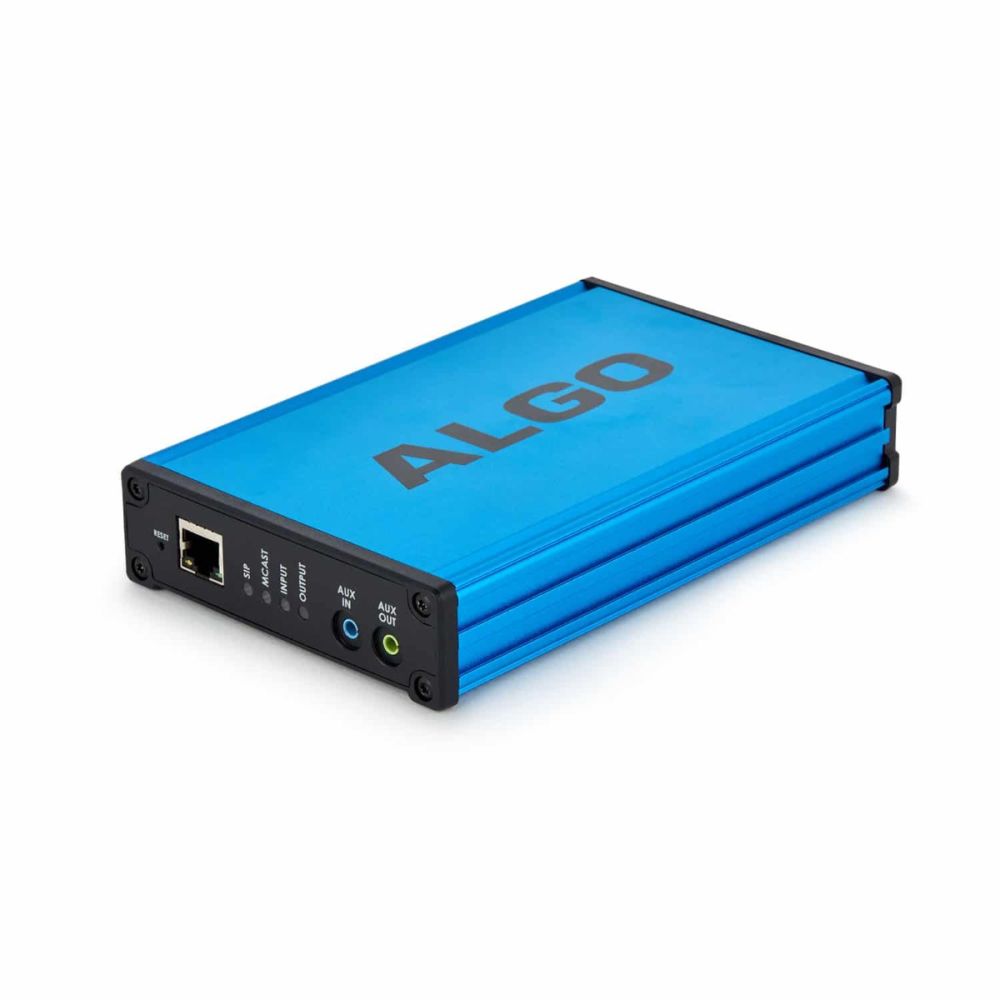
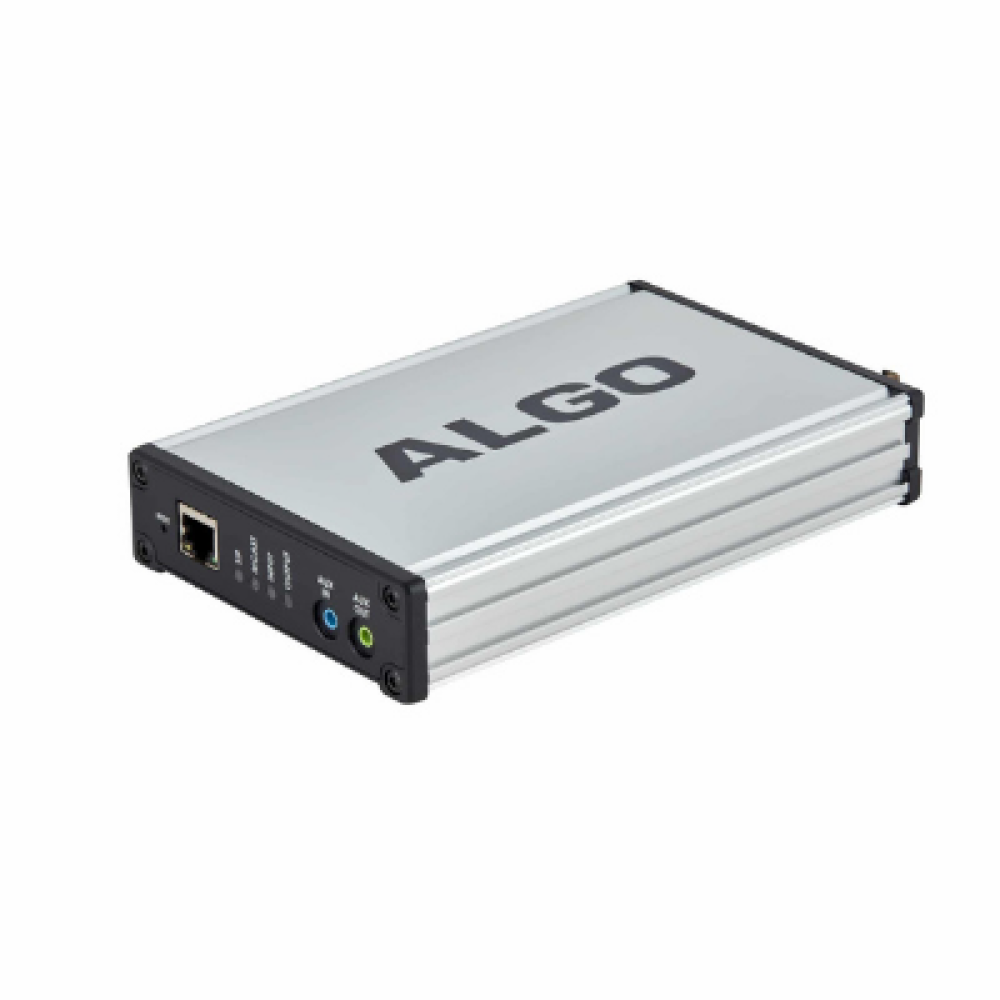
The Algo 8063 IP Door Controller is a compact and capable PoE powered digital IO interface designed specifically for door opening control and IP integration with legacy facility infrastructure. It is fully compatible with Algo's intercom systems for secure door control. Key features include: • UL/CSA, FCC, and CE certification • PoE powered digital IO interface • Compatible with Algo 8201 intercoms for seamless integration
About This Product
The Algo 8063 IP Digital IO Module is a purpose-built relay device designed to connect legacy door lock hardware directly into a modern VoIP network. It targets businesses, multi-tenant residential buildings, and industrial facilities where a traditional strike or maglock needs to be triggered by a VoIP intercom or phone system. The unit uses Power over Ethernet to keep installation simple, requiring only a single network cable at the door frame or electrical closet. This eliminates the need for a separate power supply at the door, provided the network switch can deliver sufficient PoE.
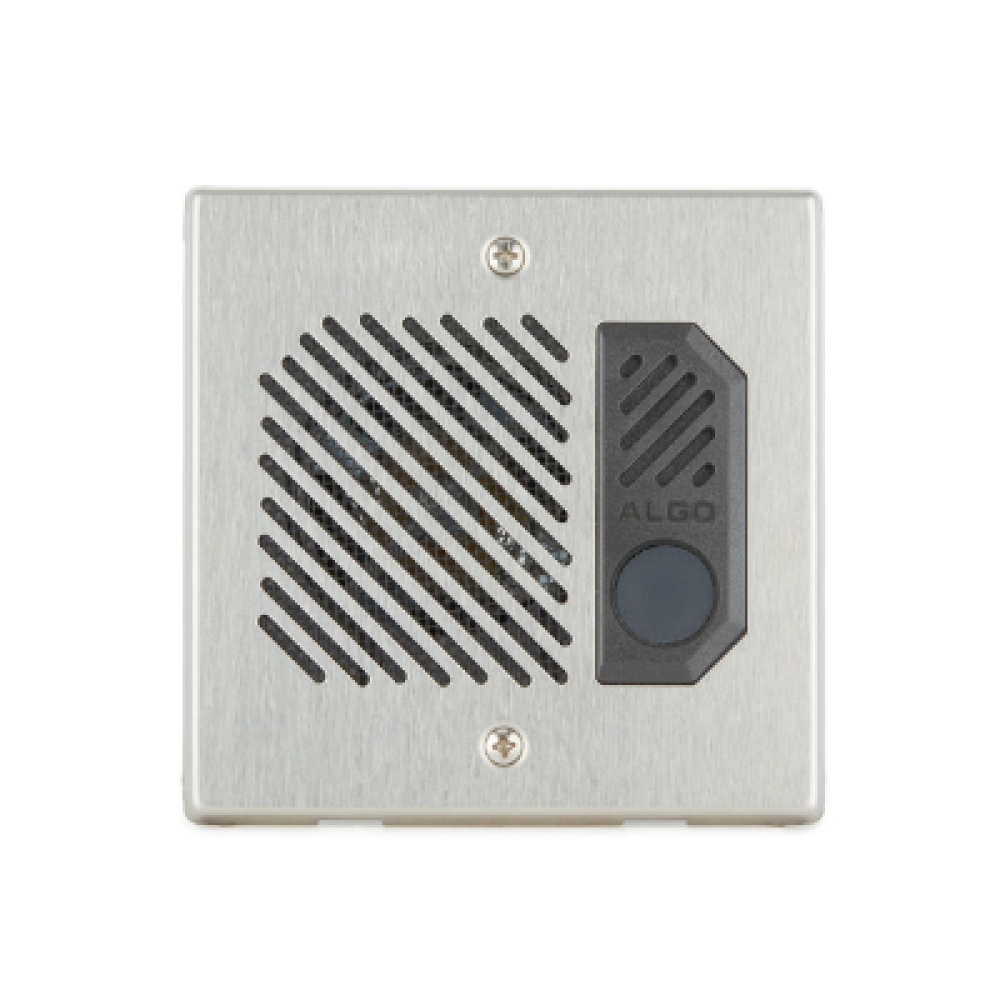
In environments already using Algo 8061 ceiling speakers or 8201 intercoms, the 8063 slots in as the natural door control endpoint. It is not, however, a full access control panel; it does not maintain a user database or card reader interface. Its strength is bridging a simple dry contact relay into a SIP-based ecosystem, where a receptionist or automated intercom session controls the door release. For Canadian businesses, this makes it a tidy fit in small to mid-sized Toronto offices, suburban medical clinics, or Vancouver condo common areas where wiring is already in place and remote management is preferred.
A buyer should understand that the 8063’s functionality depends heavily on the SIP server it registers to and the programming of the controlling device. Door control logic—timed unlock, intercom integration, dial code triggers—must be configured in the PBX or the intercom endpoints. The module itself is a relay, not a programmable controller. It also serves a single door; attempting to scale it across a dozen entries means deploying a dozen modules and managing each as a separate SIP extension, which may call for a dedicated IO server instead.
Where the 8063 is overkill is in a facility that lacks any VoIP infrastructure. If the goal is simply to buzz open a door with a push button and no integration to phones, a basic transformer and button circuit costs a fraction of the price. Conversely, where it falls short is in a high-security enterprise corridor that requires card-and-PIN authentication, audit trails, and multi-door management; the Algo is an IP peripheral, not a unified access control system, and those requirements need a dedicated controller paired with appropriate readers.
In environments already using Algo 8061 ceiling speakers or 8201 intercoms, the 8063 slots in as the natural door control endpoint. It is not, however, a full access control panel; it does not maintain a user database or card reader interface. Its strength is bridging a simple dry contact relay into a SIP-based ecosystem, where a receptionist or automated intercom session controls the door release. For Canadian businesses, this makes it a tidy fit in small to mid-sized Toronto offices, suburban medical clinics, or Vancouver condo common areas where wiring is already in place and remote management is preferred.
A buyer should understand that the 8063’s functionality depends heavily on the SIP server it registers to and the programming of the controlling device. Door control logic—timed unlock, intercom integration, dial code triggers—must be configured in the PBX or the intercom endpoints. The module itself is a relay, not a programmable controller. It also serves a single door; attempting to scale it across a dozen entries means deploying a dozen modules and managing each as a separate SIP extension, which may call for a dedicated IO server instead.
Where the 8063 is overkill is in a facility that lacks any VoIP infrastructure. If the goal is simply to buzz open a door with a push button and no integration to phones, a basic transformer and button circuit costs a fraction of the price. Conversely, where it falls short is in a high-security enterprise corridor that requires card-and-PIN authentication, audit trails, and multi-door management; the Algo is an IP peripheral, not a unified access control system, and those requirements need a dedicated controller paired with appropriate readers.
Services We Provide
- Professional Installation & Configuration
- Ongoing Maintenance & Support
- Troubleshooting & Repairs
- System Upgrades & Updates