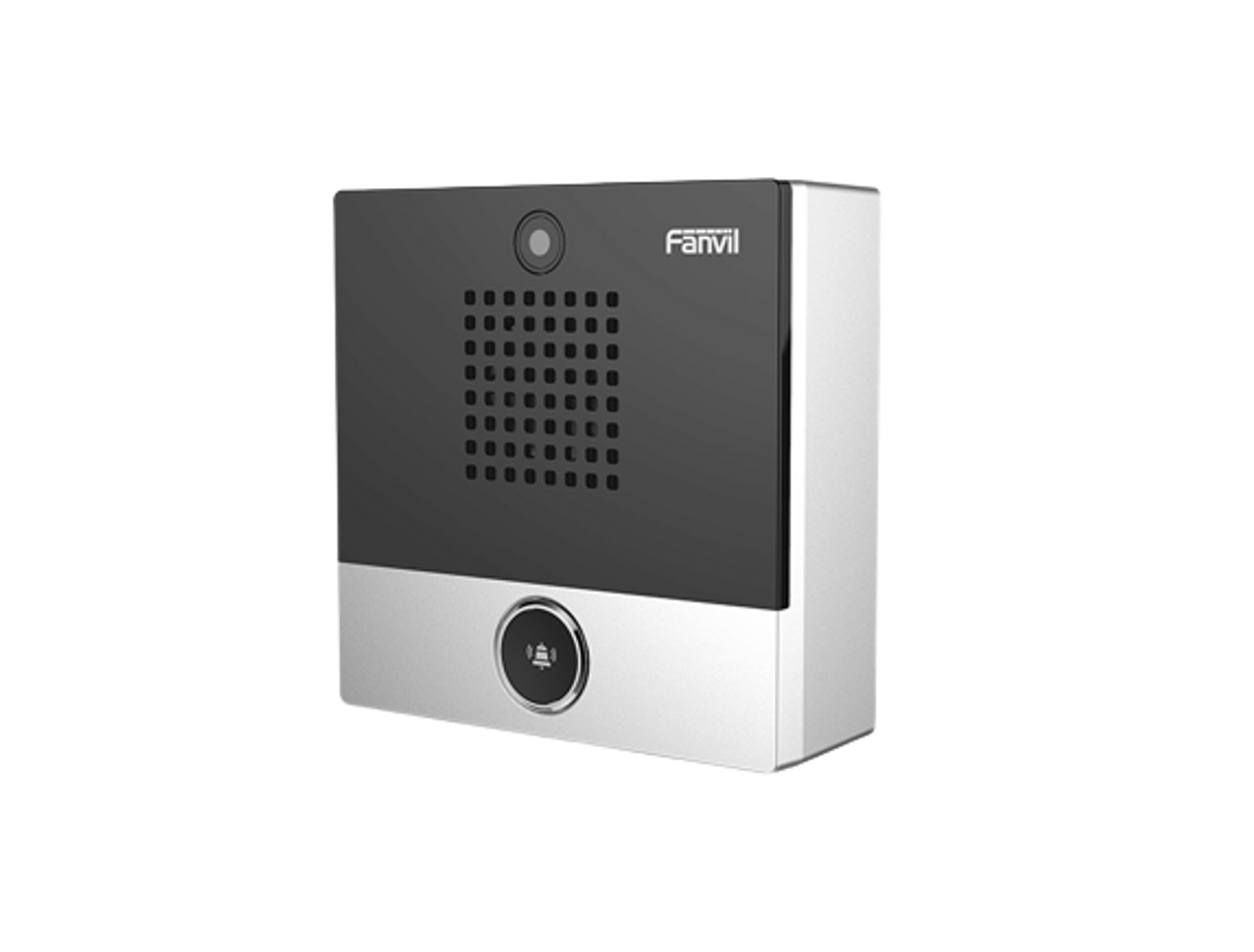
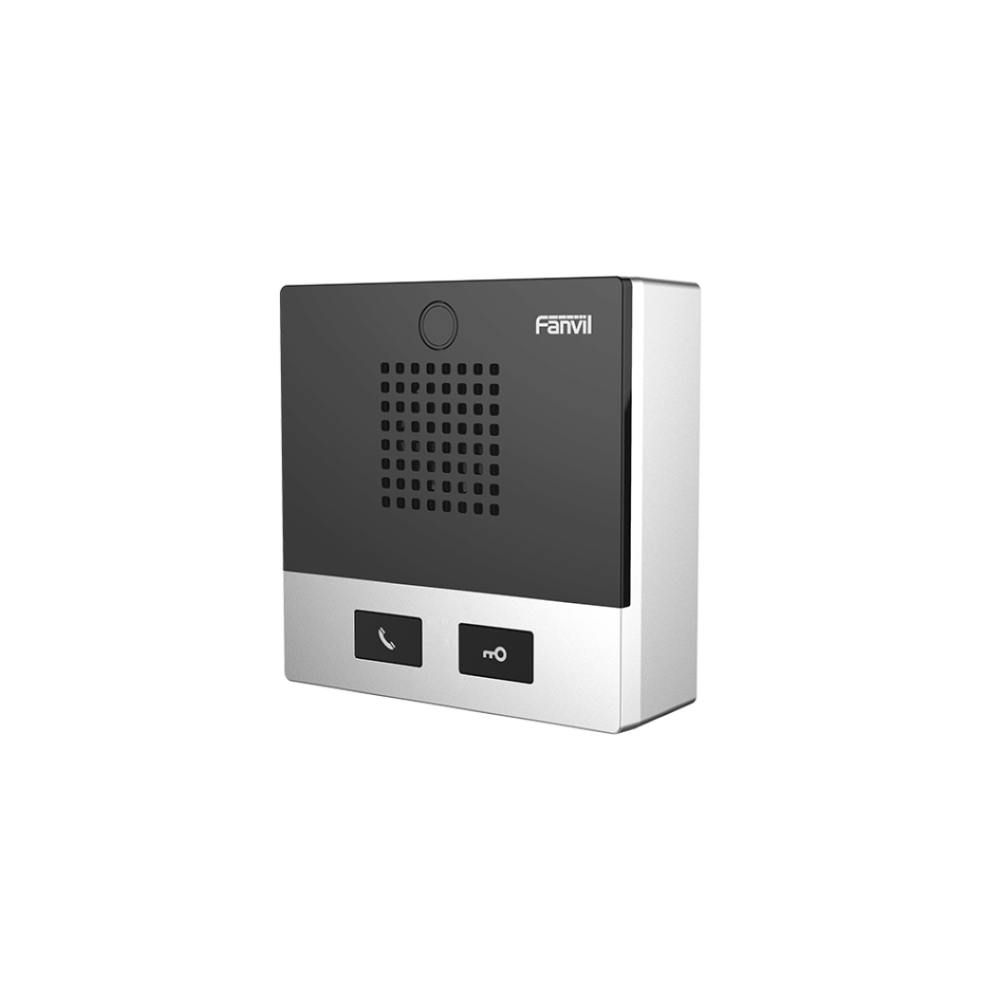
Fanvil i10SD Audio Intercom with two buttons
Frequently Asked Questions
First, confirm the network cable is plugged into a PoE-capable switch port or injector that meets 802.3af standards, as the i10SD requires PoE to operate. Next, reseat the cable at both ends and check the port’s LED on the switch—if it stays dark, try a known working port and a different patch cable. These reversible steps isolate most wiring issues safely without touching the device configuration.
Start by verifying the SIP server address, extension, and password entered in the device’s web interface are an exact match to what your phone system expects, with no extra spaces. Confirm the intercom has a valid IP address on the correct VLAN and can reach the server; a quick ping test from a laptop on the same subnet often reveals a VLAN or firewall rule gap. If credentials are correct but registration still fails, a Toronto-based VoIP support provider can usually resolve this remotely.
Check that the intercom is on a network switch port with PoE budget remaining, because voltage drops can cause intermittent audio even if the device stays powered. Look at the switch statistics for the port to see if there are CRC errors or packet loss, which typically point to a cabling or termination fault. Swapping the patch cable and avoiding long runs near electrical conduit are quick first steps that do not risk your provisioning.
Yes, because each button can be assigned a separate SIP account or extension. Configure the first button’s destination to the desk phone extension and the second to an extension that your PBX routes to a softphone or mobile client. The design is flexible enough that many Canadian businesses set one button for the front desk and the second for an on-call smartphone.
Log into the intercom’s web interface and confirm the non-working button has a destination number saved, and that the number is reachable from an internal test call placed from another phone. Check whether the PBX is rejecting the call due to a dial plan mismatch, such as a missing area code or prefix. These checks do not alter the working button’s configuration, so they are safe to perform on a live system.
Download the firmware file only from Fanvil’s official support site for the i10SD model and read the release notes to confirm it is the intended version. Schedule the update during a quiet period and, if possible, back up the current configuration through the web interface before proceeding. Should you have concerns about the process, a local VoIP specialist can handle the update and verify it against your platform’s compatibility list.
Door Phones
Fanvil i10SD Audio Intercom with two buttons
The Fanvil i10SD intercom is designed for indoor deployments in retail, apartment buildings, and offices. It features: • Two programable call buttons • Two SIP lines • HD Audio • Power over Ethernet (PoE) • Waterproof and dustproof (IP54) design • Easy to deploy and manage through Fanvil's Device Management System • Compatible with multiple platforms (3CX, OpenVox, Yeastar, epygi, Xorcom, Asterisk and many more) For a full list of specifications, please refer to the product datasheet.
About This Product
The Fanvil i10SD is built for clear, reliable communication at interior access points. It fits apartment lobbies, office entryways, and retail back-of-house doors where you need a simple, durable way for visitors or staff to buzz in. Its two programmable buttons let you reach two different extensions—front desk and shipping, for example—without wiring a full intercom panel. Because it runs on PoE, cabling is straightforward for any network closet, and the IP54 rating means it will shrug off the dust and damp that come with daily traffic in busy Toronto commercial spaces.
This intercom pairs well with most SIP platforms Canadian businesses already run, including 3CX, Yeastar, and Asterisk-based systems. It also works with Fanvil’s Device Management System for bulk provisioning, which is practical for property managers handling several units across a portfolio. Keep in mind that the i10SD is a two-line device: it’s right-sized for a single entrance with a couple of destinations, not a multi-tenant directory. If you need to handle a dozen suites at the main door, you will want a different class of intercom.
For a GTA office with a single visitor entrance and a secondary alert point, the i10SD is a tidy, cost-effective choice. Its HD audio does the heavy lifting for intelligible speech at the door, so you do not need to over-spec the rest of the voice path. The main limitation to plan for is that it is designed for indoor use or sheltered exterior locations—prolonged exposure to driving rain or winter road spray falls outside its IP54 scope. In a protected alcove or a conditioned lobby, however, it will hold up well.
If your deployment is a quiet dental office where two phones need door control, this device is well inside its comfort zone. If you are building out a university campus-wide access system with video, integration to a proprietary card-access system, and public-zone weather extremes, the i10SD is underpowered for that scope. Think of it as a focused intercom for straightforward entry calls, not a unified security endpoint.
This intercom pairs well with most SIP platforms Canadian businesses already run, including 3CX, Yeastar, and Asterisk-based systems. It also works with Fanvil’s Device Management System for bulk provisioning, which is practical for property managers handling several units across a portfolio. Keep in mind that the i10SD is a two-line device: it’s right-sized for a single entrance with a couple of destinations, not a multi-tenant directory. If you need to handle a dozen suites at the main door, you will want a different class of intercom.
For a GTA office with a single visitor entrance and a secondary alert point, the i10SD is a tidy, cost-effective choice. Its HD audio does the heavy lifting for intelligible speech at the door, so you do not need to over-spec the rest of the voice path. The main limitation to plan for is that it is designed for indoor use or sheltered exterior locations—prolonged exposure to driving rain or winter road spray falls outside its IP54 scope. In a protected alcove or a conditioned lobby, however, it will hold up well.
If your deployment is a quiet dental office where two phones need door control, this device is well inside its comfort zone. If you are building out a university campus-wide access system with video, integration to a proprietary card-access system, and public-zone weather extremes, the i10SD is underpowered for that scope. Think of it as a focused intercom for straightforward entry calls, not a unified security endpoint.
Services We Provide
- Professional Installation & Configuration
- Ongoing Maintenance & Support
- Troubleshooting & Repairs
- System Upgrades & Updates